
Longview City Directory Holdings
The two Washington State Library inventories complement each other. The county list covers Cowlitz-wide titles, while the city list places Longview inside Kelso directory runs. Do not merge them into one uninterrupted series. Confirm the exact title and publisher from the catalog record before citing a volume.
| Collection | Years | Where Held | Access |
|---|---|---|---|
| Longview in Kelso directories | 1926 to 2012, with gaps | Washington State Library | Catalog first; limited appointment access |
| Cowlitz county directories | 1907 to 1984, with gaps | Washington State Library | Onsite-use holdings |
| Longview local-history material | Years vary | Longview Room | In person; ask staff about format |
| Photographs, books, ephemera | Collection based | Cowlitz County Historical Museum | PastPerfect and staff inquiry |
The city-directory inventory lists 1926, 1929-31, 1933, 1936, 1938, 1940, 1942, 1948-51, 1953-55, 1957-65, 1967-79, 1981-82, 1984-85, 1987-96, 1998, and 2000-12. Missing years are gaps in the listed holdings, not evidence that a person left Longview.
The county inventory starts earlier, listing 1907-09 and 1915-16 before Longview existed as an incorporated city. Those books can still matter for families on land that later entered the planned city. Later county runs overlap many city-list years but differ at points. Keep each inventory's source label so another researcher can reproduce the search instead of relying on a blended range.
Find Longview Inside Kelso Volumes
The most useful local quirk is in the State Library city-directory inventory: Longview appears as “In Kelso directory.” A title-only search for Longview can therefore miss the right book. Search both place names, select the year, and inspect the catalog record before arranging access.
The official State Library screen shows the directory route and its access terms.
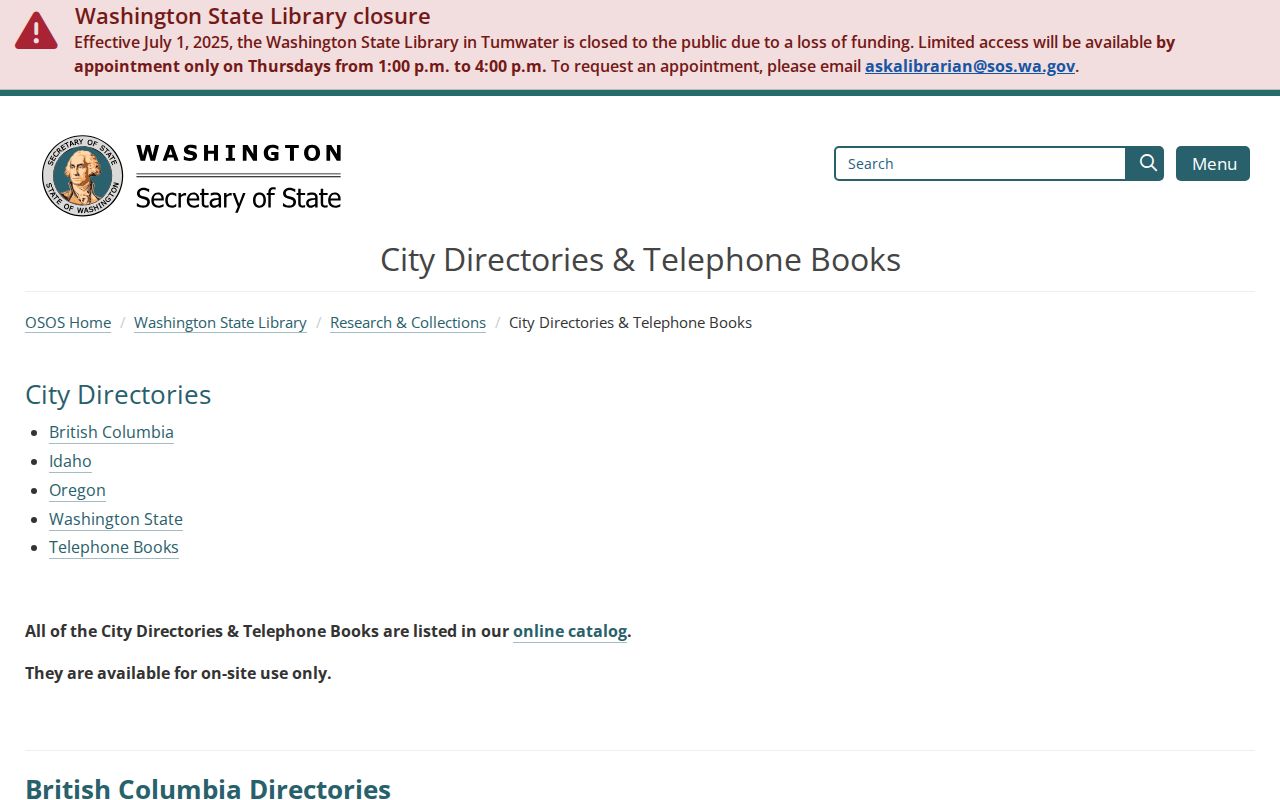
The image confirms the repository path, not an individual entry. An actual Longview page scan remained unavailable in the official pages reviewed.
Access Longview Directory Years
Washington State Library directories are onsite-use items. Ordinary public access changed on July 1, 2025. Limited appointments are listed for Thursdays from 1:00 to 4:00, and researchers should contact state_library@sos.wa.gov. The online catalog confirms a title, but it does not replace opening the volume.
Send the year, both city labels, surname variants, and the type of index needed. Ask whether the title is a historical volume, telephone book, or reverse directory, and whether an abbreviation key and street section are present. Access conditions can change, so verify the live page before travel.
Longview Public Library is the closer fallback when a trip to the State Library is impractical. Staff can check whether a year is on a local shelf, microfilm, or a licensed service. The Lower Columbia Genealogical Society can also help identify a collection or reel. A focused question works best: include the full name, alternate spelling, approximate year, known spouse or parent, and one possible address.
Note: A catalog record proves that a title is held, not that a specific Longview household appears in the volume.
Read a Longview Directory Entry
An actual page image was not exposed during research, so no sample person or exact symbol should be invented. Conventional directories may show the fields below, but each one must be checked against that volume's key. Copy punctuation, abbreviations, and cross-references as printed.
| Name | Surname and given name as printed; may represent a subscriber or householder |
|---|---|
| Address | House number and street when supplied |
| Telephone | Number or household listing when that title includes it |
| Work detail | Business or occupation may appear in some editions |
| Cross-reference | Pointer to another name, street, or special section |
- Criss-cross directory
- A listing arranged by street and house number, useful when the address is known first.
- Householder index
- An index centered on the person or household named by the publisher.
- Abbreviation key
- The volume's own legend for short forms and symbols; record it before interpreting entries.
A printed address is dated evidence of a listing, not final proof of ownership or every occupant. Compare it with the closest census, recorded deed, or permit.
Telephone books and printed directories may serve different populations. A phone book can omit unlisted subscribers, while a printed volume can select household heads or businesses according to its publisher's practice. The householder and street portions may also use different abbreviations. Photograph or transcribe the title page and legend with the entry so later readers know what kind of publication supplied the fact.
Use Longview's Local History Room
The Longview Public Library genealogy page identifies the Longview Room on the mezzanine, local-history material, a digital archive, and a joint collection with the Lower Columbia Genealogical Society. The library is at 1600 Louisiana Street and can be reached at 360-442-5300. Ask whether the needed year is shelved, on microfilm, or available through a licensed database.
The library's official genealogy screen introduces these research channels.
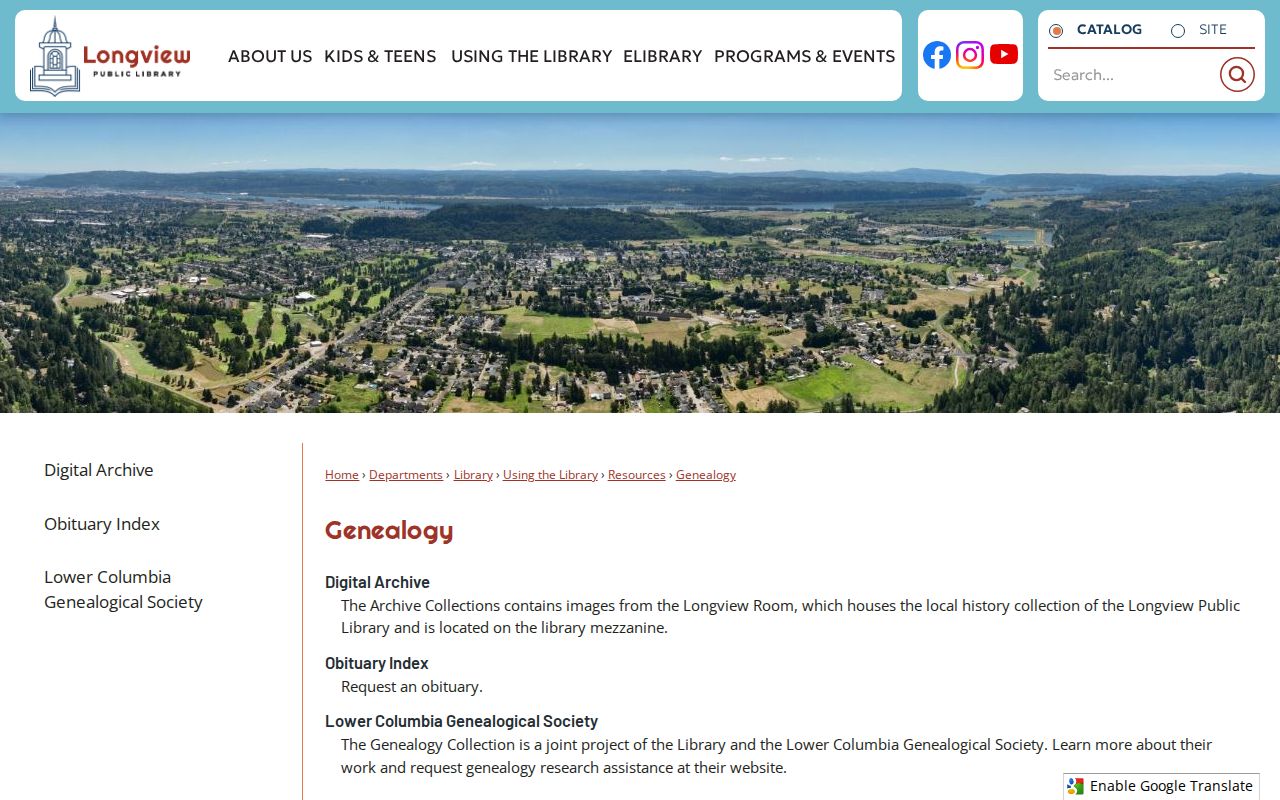
The library is also the route to its partial obituary index and local newspaper microfilm, both useful when a directory trail stops.
Longview Collections Beyond Directories
The Cowlitz County Historical Museum collections add photographs, books, artifacts, school material, business ephemera, and a PastPerfect search. These are companion clues, not substitute directory entries. Record the item number, title, date, creator, and restrictions, then confirm any person or address in a primary record.
The museum collection page shows its research and catalog routes.
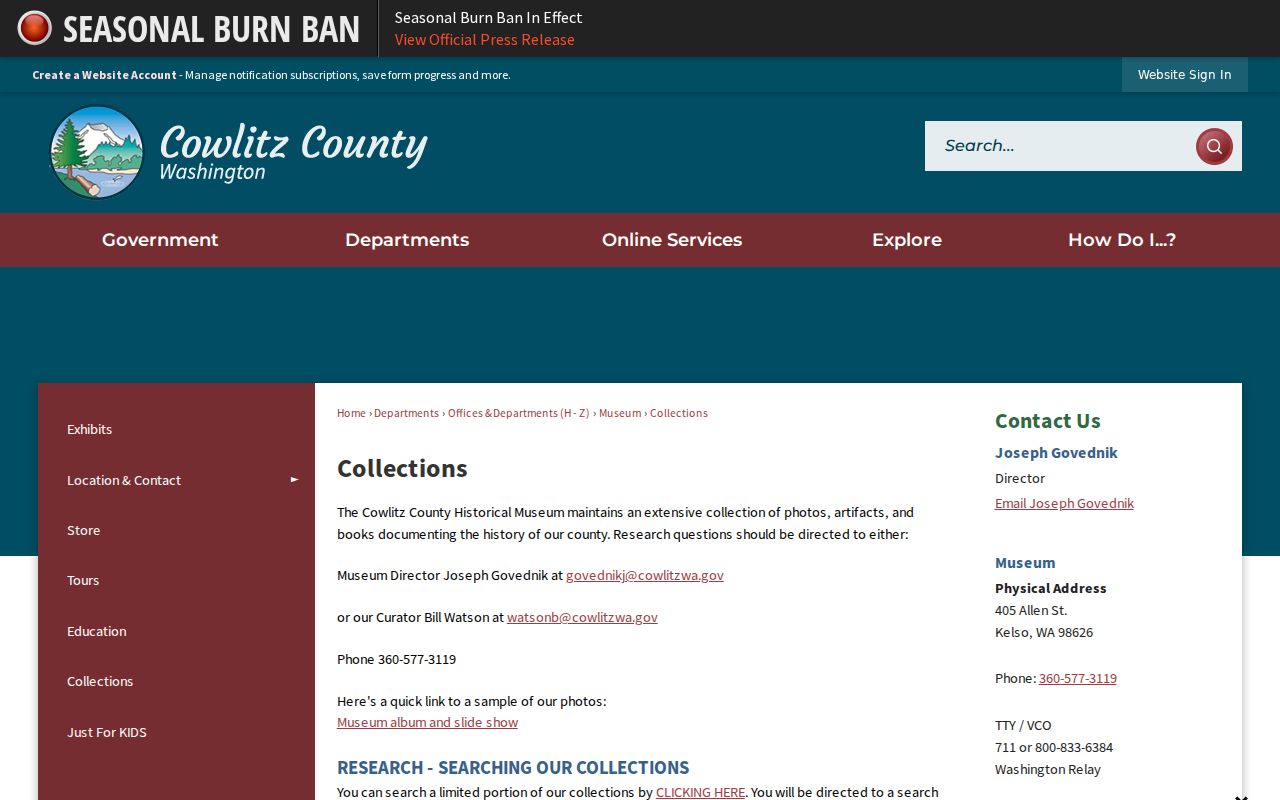
Washington Archives adds Longview city records from 1923-67, Long-Bell material, maps, photographs, and oral reminiscences. Ask at the collection level because not every series is digitized.
The Longview Library ContentDM archive can be searched with surnames, street names, businesses, and collection titles. Save the item identifier, caption, date, creator, and rights statement. A photo caption is a lead, not an official address record. The partial obituary index and newspaper microfilm can then connect a listing to relatives, organizations, or a later move, while a deed or vital record supplies stronger confirmation.
Longview Directory Research Timeline
Longview's planned origin helps set the right starting years. Older county material can predate the city, while the first Longview entries may sit in a Kelso-labeled book.
| Year | Research event |
|---|---|
| 1922-23 | Land options and city planning began; pre-city owners remain key search names. |
| 1923 | The city was dedicated, a plat documented the plan, and a first city census followed. |
| 1924 | Longview incorporated, giving municipal records a formal city context. |
| 1926 | The listed Longview-in-Kelso directory run begins. |
| 2012 | The latest Longview year shown in the inspected State Library city list. |
The Plebuch tract and Third Avenue curve show why plats can matter beside a directory volume. A street alignment may preserve pre-city ownership even when later volumes use modern addresses.
Many of the original owners reportedly remained for the first city census in December 1923. That creates an unusual bridge from the pre-city owner names to the first municipal-era records. Search the 1923 plat and census clue first, then move into the earliest available Longview-in-Kelso volume. For a hard case, the Archives guide's Long-Bell records, owner applications, maps, and permits can explain why a surname appears before a standard Longview address does.
Trace Families in Longview Directories
Use each edition as one dated snapshot. Start with a year near a known event, then move both forward and back. Preserve spelling changes and the exact address. Census years, deeds, permits, newspapers, and obituaries can test relationships that a directory only suggests.
- Search both Longview and Kelso labels for the nearest available year.
- Copy the entry, page, title, year, and abbreviation key exactly.
- Follow the surname through the next available volumes, noting address and listing changes.
- Pair the run with federal census material and recorded deeds for the same period.
- Use the partial obituary index, newspaper microfilm, or a vital-record route when the listing ends.
A disappearance has several possible causes: a move, death, changed surname, unlisted telephone, publisher omission, or missing volume. Report it as the last confirmed listing until another source explains the change. For present-day verification, use the Longview resident lookup rather than stretching a historical entry beyond its year.